Start With Function, Then Add Symbolism
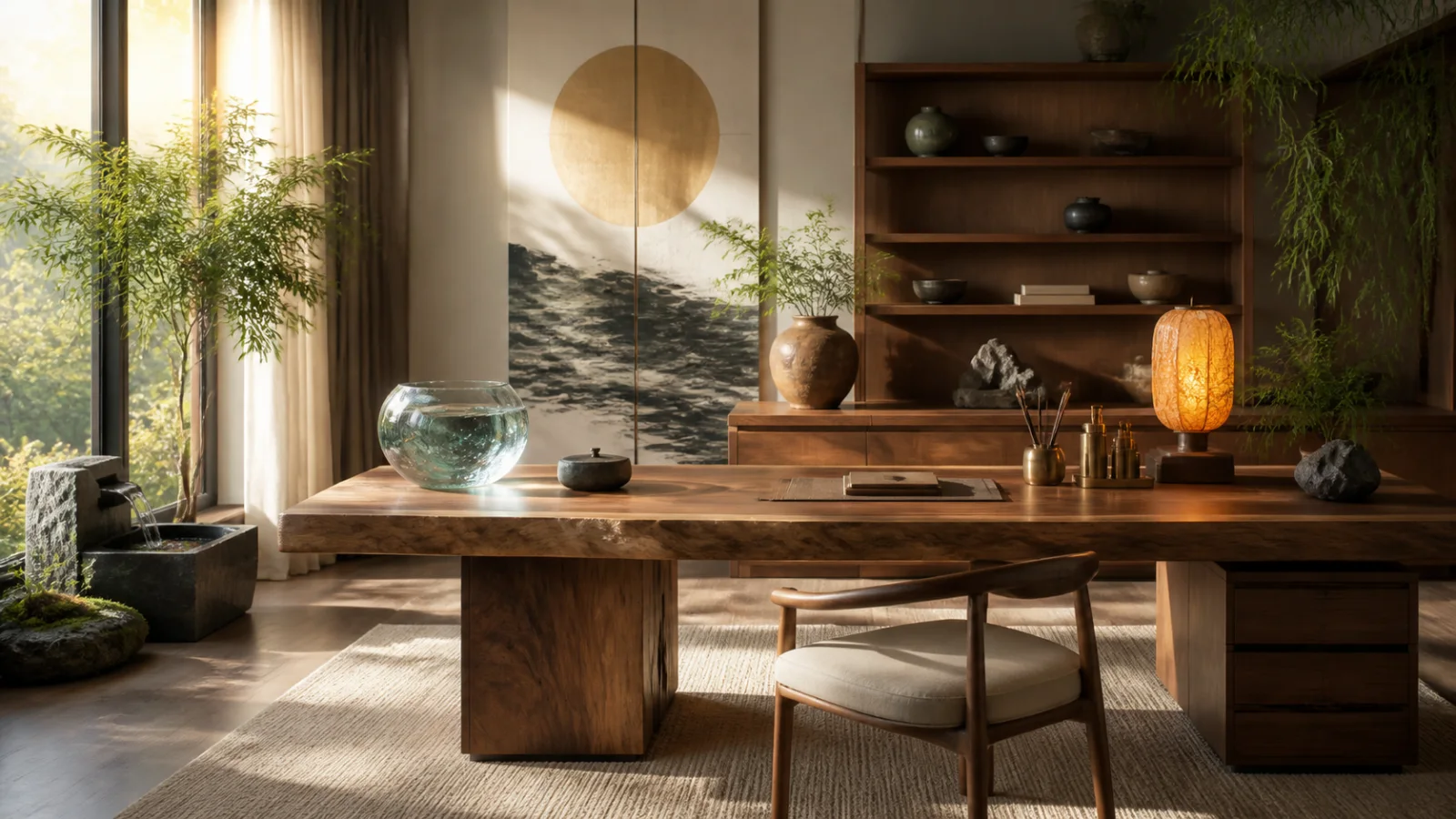
An effective workspace needs good light, comfortable posture, reliable equipment, and fewer distractions. Five Elements theory can then provide a useful design language for tuning the mood of the room.
The goal is not to fill the office with symbolic objects. It is to notice what the space needs more or less of.
Wood: Growth and Development
Wood supports learning, planning, and steady expansion.
Try:
- A healthy plant or visible natural texture
- Vertical storage that keeps projects moving upward
- Green accents used with restraint
- A clear area for notes, sketches, and developing ideas
Too much Wood can feel crowded or unfinished. Prune old projects and remove supplies that no longer support active work.
Fire: Visibility and Motivation
Fire supports energy, expression, and confidence.
Try:
- Warm task lighting
- A small red, coral, or amber accent
- A visible reminder of the audience you serve
- A presentation-ready area for calls or creative work
Too much Fire may create agitation. If the room already has bright screens, harsh lighting, and constant alerts, add calm before adding more stimulation.
Earth: Stability and Completion
Earth supports routine, reliability, and grounded decisions.
Try:
- A stable desk and supportive chair
- Ceramic, stone, or textured neutral materials
- A weekly planning surface
- Closed storage for completed or inactive work
Too much Earth can feel heavy. Keep pathways open and make sure the room still allows movement and change.
Metal: Clarity and Standards
Metal supports precision, boundaries, and organization.
Try:
- Clean cable management
- A limited tool set with clear homes
- White, gray, or metallic details
- Defined start and stop rituals for the workday
Too much Metal can become sterile or perfectionistic. Add warmth and signs of life if the room feels more like a laboratory than a place for human work.
Water: Reflection and Flow
Water supports research, intuition, and strategic thinking.
Try:
- Dark blue or charcoal accents
- A calm background for deep work
- Curved shapes or visual movement
- Time blocks for reading and uninterrupted thinking
Too much Water may feel vague or sleepy. Pair reflective space with visible priorities and concrete deadlines.
A Simple Workspace Audit
Stand at the doorway and ask:
- Can I identify the main purpose of this room?
- Which element dominates visually and behaviorally?
- What work problem am I trying to solve: focus, motivation, stability, clarity, or flow?
- What is the smallest change that supports that need?
Make one or two changes, then observe for a week. A functional improvement should be noticeable in your behavior, not only in the appearance of the room.
Match the Space to the Task
Different work phases may need different elemental emphasis. Brainstorming may benefit from Wood and Water. Presenting may need Fire. Operations may need Earth and Metal. You can shift the balance with lighting, layout, sound, and what is visible on the desk.
Explore your Five Elements profile to identify which qualities you naturally bring to work and which ones your environment may need to support.